Make A Material In Autocad With Your Own Texture For Mac 2016
You will add layer to the texture and customize it using the brush tool. This tutorial from Bittbox shows how you can easily create awesome textures of your own. You can then use these textures for all different purposes in your own designs.
AutoCAD® Mechanical 2016 Training Course (now includes the AutoCAD 2016 Essentials Series) A full-featured AutoCAD Mechanical training course covering beginner to advanced concepts, and everything in between. In 118 individual video tutorials and 7 hours of instructor-led training, Nicholas Bouray provides comprehensive coverage of AutoCAD Mechanical 2016.
Next, we'll look at textures where we'll learn how to edit and scale existing textures, as well as import images so that we can create our own textures. By the end of this course, you'll have in-depth knowledge of how to use and manipulate materials so that you can bring your concepts to life using AutoCAD.
We don’t want this painting to appear tiled, but as a single image. Apply it to the pic layer. Test the materials settings by rendering your model.
Another approach to creating a bokeh background. “Bokeh” refers to the texture produced by the camera lens when out-focused at a place from where light is emerging. You can also achieve the bokeh texture by using the brush tool in photoshop.
You have so far used the hide and shade commands to give you some idea towards how the final piece will look. The next step is to learn about the RENDER command. This command is the most powerful one for viewing your 3D objects.
New Highlighting of 3D objects and parts of 3D objects while using certain tools in Redsdk mode including imprinting, quick pull & 3D mirror copying. New Redsdk 4.x Engine with Photorealistic Enhancements including new portals, improved tone mapping, and improved conceptual selector. Improved Render Manager and workflow of rendering components including materials, luminances, environments, and advanced render styles. NEW File Buffer saves the Undo/Redo buffer and is re-loaded when the file is opened, so even if you didn’t mean to save your last changes, you can undo them. Improved RedSDK Transparent fill support now works the same in both Redsdk and GDI.
If you have a photo editing program like Photoshop or (it's free), you will be able to adjust the image files to fit your needs. For practice, here is good way to get graphics into your renderings. Draw an octagon ( POLYGON command) and turn it into a REGION. Then create a new material using this image of a and apply it to the region.
Jun 13, 2012 Make a tutorial showing how to make a gold foil texture? Feb 4, 2014 So i would like to get a cartoon effect.
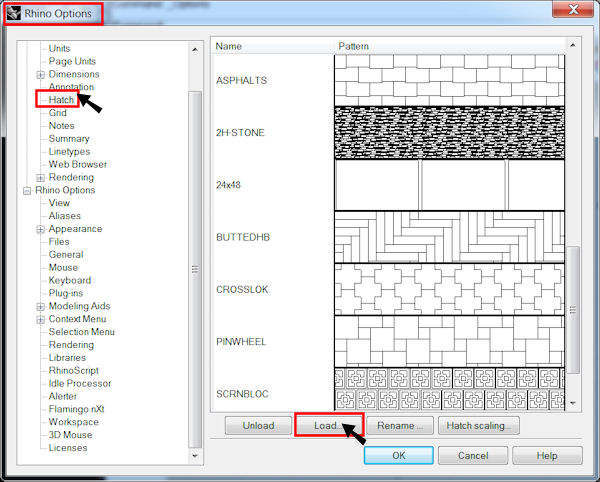
Is a former Express Tool that is now included in the core AutoCAD product. You can create a hatch pattern from most anything without having to learn how to write a hatch pattern definition file. This AutoCAD tutorial is by ’s own Cliff Young of the Test Development Team.
Note: If you have found colors at manufacturers' websites, in digital photos, or in other files and want to incorporate these colors into your design, see article the article on Using the Color Chooser Tool listed in the section below. • The Rotate Angle allows you to specify how the texture is rotated on the surface of the object(s) it is applied to. In some cases, you may want to create several copies of a single material, such as wood flooring, and adjust the Rotate Angle on both the Pattern and Texture panels. You may find it helpful to add the rotation angle to the material's name to allow the correct material to be quickly selected from the Library.
So all I have to do is press this and as you notice, this actually comes up and it looks very much like the edit tab in the materials window. So we can go ahead and give this material a name. I'm going to call it table legs.
Is a former Express Tool that is now included in the core AutoCAD product. You can create a hatch pattern from most anything without having to learn how to write a hatch pattern definition file. This AutoCAD tutorial is by ’s own Cliff Young of the Test Development Team. Draw a rectangle and divide it into quadrants. Draw polylines across the rectangle to simulate a wood grain. Be sure that the number of endpoints at the top edge is the same as the number of endpoints at the bottom edge, and the number of endpoints at the left edge is the same as the number of endpoints at the right edge.
Automatic Wall Openings - “Slide” doors, windows, arches or any shape to create “openings” in walls with linked 2D and 3D views.  Even set vertical alignment properties. Dimensions display as doors and windows are inserted, showing the distance to and from the wall ends for easier, more precise placement.
Draw in SketchUp 3. Draw in SketchUp • • • • • • • • • • • • • 4. Measure and Label 4. Measure and Label • • • • • • 5.
Please call for multi-user license information.
Creating a stunning grungy background can be quite simple, and this tutorial shows how you can do it. You can easily draw different shapes on the canvas, add a suitable background texture and customize the whole picture to produce a wonderful grungy metal texture. This tutorial shows how to use texture to compliment a beautiful design. Add a beautful texture in the background, add different shape layers and customize those shape layers to create a picture with stunning composition. Another awesome and abstract background can be created by following this tutorial. You will learn to transform an ugly-looking waves filter to a beautifully contrasted wave filter. You have to add different layers, gradient overlays and customize the picture as a whole to achieve the desired results.
It might not be the right scale or exactly what you envisioned, but the material is applied to object now - and that's the easy part. Zoom in on your object to see the material a little closer if you need to. BASIC RENDERING There are few ways to render, and for this exercise I will suggest this method. Download offline installer chrome for mac os.
The watercolor effects used in this tutorial give it an awesome textured look. You will insert different smart objects such as watercolor brush to add watermarks, use layer masks, adjust the hue/saturation layer and other related customizations that will help you achieve the desired results. Learn how to use texture to grunge up a portrait. Applu a layer mask and paint the whole portrait uniformly to achieve the desired results. Learn how to use simple textures to create a beautiful design. You will learn to add a bark texture to a portrait and blending it properly alongwith the necessary customization.