Best Photo Editing Apps For Apple Mac
Fotor is best described as a photo enhancer: its tools enable you to change the parameters of an image – colour levels, brightness, rotation, vignettes, size and so on – or to digitally slim people or remove wrinkles, and there are some cool creative tools including focus effects. The main app is free but some features require a subscription to: smoothing, blush, reshape, most filters and many special effects are watermarked in the free edition. There’s enough here to have fun without paying up, but clearly the developer hopes you'll opt for a subscription. Download here: • • 5. Google's image editor is a streamlined tool designed for simple editing As with most Google things, 99.9% of ’ features are browser-based. There are for macOS and iOS, which can add new pictures to your Google photos library automatically, but everything else happens online. You get unlimited storage for images with a resolution up to 16 megapixels, but higher quality photos will eat into your Google Drive storage allowance.
I typically only use a photo editor bc a picture turns out with something looking weird that doesn’t normally look that way so I use this app to fix that and my pictures can look the way they are supposed to for real without that awful fake look that 99% of these apps make you have! This app is amazing and I download it on every new phone I buy! I truly 100% recommend this app!
Blackmagic Design's Davinci Resolve has been growing from an advanced color-grading tool to an video post-production solution. If you are an experienced video maker and want to apply a high quality color correction/grading to your footage, Davinci Resolve's free basic version can be your choice. Timeline curve function is a powerful feature for you to add keyframe if you want to edit a specific scene.
Photo Editing Apps Mac
• Microsoft Windows is sold separately. • Apple News is available in the U.S., UK, and Australia. • Testing conducted by Apple in August 2018 on production 3.1GHz dual-core Intel Core i5-based 13-inch MacBook Pro systems with 8GB RAM, 256GB SSD, and prerelease macOS Mojave running Safari 12.
The app can also import PDF files and raw formats of many digital cameras. GIMP works through a set of layers, each containing several channels. These layers are used to add effects and filters, edit images using brushes, and other choices. Within these set of features, Path tools stand out, as they can create vectors, which can be used in complex selections. This photo editing for Mac app also has the advantage of being capable of handling colors in a variety of ways, such as RGB, CMYK, Water-color formats, and hexadecimal formats. CMYK is very useful when working with printers. GIMP also has a set of Smart tools, that although not so easy to use, may become very handy for the expert user.
You can even adjust the masking tool, use a magic rope, or clone stamp your way to a new photo. If you're someone who's a perfectionist when it comes to your photography and you just can't stand that one stupid, distracting blur in the background, then Snapheal is the guy for you. • $7.99 - Preview. I know what you're thinking: 'Preview?
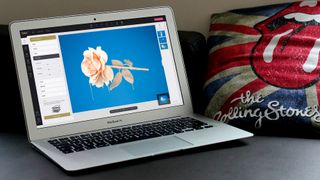
The Mac is still the best device for serious photo editing, so you need some serious photo editing apps to make an impact. The built-in Photos app on Mac offers several useful photo editing tools. You can crop, adjust lighting and color, set the white balance, add filters, remove unwanted blemishes, and a few more things.
You can turn Live Photos into fun, short video loops to share. And you can make edits to photos using apps like Photoshop and Pixelmator, and your changes will automatically be saved back to your Photos library.
9. Lens Distortions Enhance your photos with sunlight, lens flares, rain, snow, fog and shimmers: • Add beauty and drama to your shots with natural sunlight and lens flares • Create atmospheric depth with genuine rain, snow or fog • Frame your subject or blur the edges with elegant glass textures • Layer several different overlays on a single image • Adjust the opacity, brightness and color of each overlay There are many apps that add light and weather effects to your photos, but is one of the best. Its high quality overlays include sunlight, lens flares, rain, snow and fog. There are also shimmer effects and glass elements to add sparkle or blur to your image. Combine several different effects for a unique look. Use the sliders to adjust the opacity, brightness, contrast and color of each overlay. Make the elements stand out for a bold look, or tone them down so they blend in.
Features: • It allows you to edit several audio and video tracks • You can customize shortcuts easily Pros: It is open source software Cons: Not friendly for greenhands; Update slowly. Like Avidemux, Blender is available for Microsoft Windows, Mac OS X, GNU/Linux, FreeBSD and OpenBSD.
Photo editing on a Mac is full of wonderful possibilities — much more than what you can do on mobile devices. Photo editing has become a big deal because that's where we tend to take and share our snapshots these days.  But many of us still keep our main libraries on our Macs. Because of its faster processors, larger storage, and all-around bigger computing power, the Mac is still the best device for serious photo editing. The offers several useful photo editing tools.
Then check out Fotor Photo Editor! With this photo editor, you can easily adjust contrast and color of more washed-out photos, add borders, tilt and shift your images, add different text, slap on a few filters, and so much more, all from the easy-to-find toolbox on the right side of the app.
The filters and overlays in Afterlight 2 are great for enhancing or changing the mood in your photos. The app comes with a set of filters, and you can add more collections of filters for free. The customizable text and artwork is a fun way to add graphics to your images. And the double-exposure tool lets you create unique combinations of images.
The key decision behind using any imaging application lies with what the requirements are for the task at hand. You need to closely research the product and get really clear on both the product's strengths and its weaknesses. Also, take the time to look at the work others have created with the product. For example, if you are looking to create simple graphics or to touch up family photos, then an application without a serious number of filters and effects may just fit the bill. Visual studio for mac sidebar bottom. On the other hand, if you want to do compositing and add effects then a limited feature set may not be ideal for your needs.